Bookmark and Share

Your Resume and its Power

If you are looking for a new job then you have one weapon at your disposal that will be your best to use to help you get a job, or at least an interview; your resume. Your resume is the single most important thing to have at full capacity as the difference between a quality resume and a poor resume is usually getting the job you are after or staying unemployed.

It makes sense when you think about it. A potential employer has no idea as to who the heck you are. They also have no idea who the other hundreds of applicants after a job are either. So, they must use resumes to decide who they do and do not want to talk to.

This means that you resume has all the power in deciding whether or not you will get to interview for a particular job. If your resume adequately conveys a good story about you and piques the interest of the potential employer, then you will likely get a phone call for an interview. However, I your resume is weak and puts the potential employer to sleep, then you will likely have your resume doing nothing more than meet with the trash can.

Knowing the power of your resume, it stands to reason that you should be sure that it is up to speed. It should contain all relevant information and everything should be looked over at least twice before you call it complete. If there are changes that need to be made and they get missed, then your resume’s power will be greatly diminished.

Don’t let your chance at a potential job slip away. Be sure that your resume writing is everything it can be and should be to give it the chance to be as powerful as it can be so it can help land you a great paying job.

Resume Don’ts

If there is one sure way to turn off a potential employer it is by having a resume that is less than adequate. A bad resume is almost like a slap in the face to a potential employer. You expect them to read your resume, but then you send them a bad resume, so you can see how it could be a little insulting.

Here are some things to avoid on your resume:

  • Long Length: Remember that you are writing a resume and not a book. Try to keep your resume between one and two pages. Anything more will quickly have the potential employer losing interest fast.
  • Fancy Style: While you do in fact want to get a little fancy on your resume, don’t go overboard. Avoid fancy fonts, lots of bold, lots of italics, and the like. Stick to a style that is easy to read and you can be certain it will be read.
  • Grammar Errors: Even spell check can’t catch everything. That’s why it is so important to review your resume several time s before you start to distribute it. Potential employers don’t like to see knight where night is supposed to go or no where know is supposed to be. Those little mistakes can still cost you an opportunity for an interview.
  • Irrelevancy: Whatever job sector you are going after, keep your resume relevant to that. Irrelevancy in a resume is like the plague and will not do you any favors with potential employers.

When you send off your resume you want it to get read. If it does, then you have a good chance of at least getting a job interview. However, if you send a bad resume riddled with all sorts of don’ts, then your chances of landing a job, or even an interview for that matter, are going to be slim to none.

Read reviews of the best resume services.

Resume Dos

You already know that your resume is the key that will open many doors for you when you are looking for a job, but do you know all the things you should absolutely be sure get done to your resume before it gets distributed?  Guaranteeing that a great resume is being sent out is the best thing you can do to help yourself land job interviews that will eventually lead to a job.

To ensure your resume is the best it can be, be sure the following dos get executed:

  • Stay Relevant: Make sure that all the information contained on your resume is relevant to the job you are trying to get. Remember, potential employers have a lot of resumes to look over and they won’t have time to read a bunch of irrelevant nonsense.
  • Be Truthful: While it may be tempting to stretch the truth on your resume, don’t. It is better to be truthful from the get go so the potential employer knows exactly what they are getting with you. If you lie on your resume and get caught, even after you have the job, chances are you will be fired. It just isn’t worth it.
  • Proofread: When your resume is done, be sure you proofread it and then proofread it again. In fact, have someone else proofread it too. This is very important as even a tiny mistake on your resume can end up costing you the job of your dreams.

Making sure you resume is all that it can be is the best way in which you can ensure a lot of opportunity for yourself. It makes perfect sense when you think about it. Potential employers will quickly weed out any resumes that are not top notch, so it is certainly in your best interest to make sure the resume you send off is one worth reading in its entirety.

Revamp Your Resume Before You Begin Distribution

Ask yourself a question; when is the last time you revamped your resume? Your resume will be the single most important tool you possess when it comes to looking for a job so you need to make sure that it is more than simply up to par. Distributing a stale resume can have the not so great effect of seeing that resume hit the bottom of a lot of trash cans in a hurry.

To begin the revamping process you first need to print up your resume and thoroughly read through it. Look for any obvious mistakes, but also look for any outdated information. As you find it, highlight it and keep going.

The second thing to look for is anything that is not relevant to the job in which you are going after. Potential employers do not care for irrelevancy and if there is a lot of it, the dreaded trash can bottom comes into play once more. Again, mark these irrelevancies with a highlighter.

Once you have completed your reading and highlighting session you then need to figure out what to put in the place of the highlighted areas. If you only have a couple of sentences highlighted, then they can likely just be deleted, but if you have a lot of highlighted areas then deleting all of it and not replacing it with anything may make your resume too small. You can always add items, like awards, that you may have received since the last time you wrote your resume.

Once you have completed your replacement of all the mistakes and irrelevancies, then you need to read over it once more and be sure it reads the way it should. After you are sure you have the perfectly revamped resume you can then begin to distribute it and wait for the interview calls to come pouring in.

Jazz Up Your Resume to Make it Stand Out

The most important tool you can carry in your job finding tool box is a well written resume. The problem is that with so many people now looking for work a well written resume is a dime a dozen.

However, it is possible for you to stand out from the crowd by jazzing up your resume just a bit. This is an exercise that should be done with great caution. While a resume that is jazzed up enough to catch the attention of a potential employer is a good thing, one that is too jazzed up is a bad thing. So it is a delicate balance.

Some ways you can jazz up your resume are as follows:

  • Font: Go with a slightly fancier font than normal. Just be sure that he font is appealing to the eye and easy to read.
  • Bullet Points: Use bullet points to break up the monotony of your paragraphs and give each section a little flare. Again, don’t go overboard with this.
  • Paper: Believe it or not, the quality of paper is a great way to jazz up your resume. There is a big difference in paper quality and when put side by side, a low quality piece of paper sticks out like a sore thumb next to a high quality piece of paper.
  • Bold and Italics: Use these sparingly, but certainly implement them. A great place to use either is when separating sections of your resume with a sub-title.

By implementing these small but effective tricks your resume will be sure to get more looks than the average looking resume. It will also get more looks than the resumes that are too busy looking and come off as annoying. In the end it is all about the views, so be sure to find your balance and create the best looking as well as the most well read resume that you can.

Three Reasons Not to Lie on Your Resume

Your resume is the most powerful weapon in the war of job hunting, so you have to be sure that it is as strong as can be. What many people do with their resume is that they ‘embellish’ the facts just a bit. Call it what you will, it is flat out lying and it is simply not a good idea.

While there are many reasons not to lie on your resume there are three in particular that should stick out to you like a sore thumb. These three reasons are:

•    The Business World is a Small One: In business, you just never know who knows who. If you lie on your resume and the potential employer you are interviewing with knows someone from your last place of employment then chances are that you will get caught in that lie.
•    What if an Employer Calls Your Bluff: If you state on your resume that you have certain skills that you really don’t have and you end up with the position you were going after, what happens if your employer calls your bluff? If you are asked to do something because you said you could, but you really can’t, you are likely to get fired as fast as you were hired.
•    Black Lists are Bad: Again, the business world is a small one and if you get a bad reputation because you get caught lying on your resume you may wind up being black listed in your business community. This will make it extremely difficult to get hired and can leave you with many months of jobless woes.

In life, honesty is always the best policy. The same holds true for finding a job. Your resume should be written to impress, but stick to the facts and stick to the truth. Your perfect job scenario is out there and you don’t need to lie in order to find it.

Summarize Yourself with a Resume Cloud

resume cloudWhen visiting websites, especially blogs, you may have begun to notice words of varying sizes in a display off in the margin. Known as a tag cloud, or word cloud, these are visual depictions of the word content of a site.  Basically, they visually summarize the main theme of a website; the more a particular word is used in blog posts, the larger the font of the term in the word cloud.

By presenting a weighted view of a site, users immediately know the key concepts discussed there.  Now, you can easily see what your resume says about you by creating a resume cloud.  Just as a site visitor can quickly get information from a word cloud, you can quickly see what points stand out on your resume.  A resume cloud gives you a new perspective on your resume, demonstrating what really stands out and most likely what a hiring manager or HR personnel sees.

Creating your own resume cloud is very easy.  Simply paste the text of your resume into the form at http://www.jobgoround.com/tools/resume-tag-cloud/ and with the click of a button get your own resume cloud.  If you have several different versions of your resume, it can be very interesting to compare the different resume clouds. It’s interesting and fun to see what your resume really says about you and your experience.

Job Hunting? Use Keywords in Your Resume!

resume writingIf you’re like many job hunters these days you’re looking for ways to get a leg up on your competition in the job market. One place to start is with the large job search engines and job boards, like CareerBuilder.com and Monster.com. But don’t just rely on endless searches through the countless and sometimes non-descript job postings. Make sure you post your resume and profile information and make them available for prospective employers. Many companies will do a search for candidates that match specific job posting requirements, and when they do, you want them to find you. So tailor your resume to make yourself easy to find!

One of the best ways to be easy to find by employers you want to work for and jobs you want to have is to tailor your resume for the job you want. Keywords are key! In your profile and your resume be sure to include a number of different keywords that indicate your skills, experience and interests. For example, if you want to find a job as a marketing consultant specializing in sporting goods, include keywords or phrases such as sporting goods, sports marketing, marketing consultant and sporting goods consultant. Anything that might apply to the industry in which you wish to work and the position you hope to attain will help employers locate you. Additionally, in your profile on the job search sites, be sure to include any and all pertinent information related to your experience. This will help employers filter you in when doing a general search for qualifications.

It can be easy to get lost in the big job search sites. Give yourself an edge on the competition by including important keywords in your profile and your resume when you post them for potential employers to view. Adding keywords can give you the opportunity to found by more employers.

Resumes: One is Not Enough

Writing a good resume is a huge undertaking. Summarizing your work and educational experience in a way that can market you to potential employees can be daunting. And it can be time consuming! But while you’re taking on the challenge, do it again. Having more than one resume can greatly improve your job hunting prospects, as well as making it easier when a customized resume is needed.

One resume is great if you’re applying for the same kind of position at the same kind of company doing the same thing every time you put your resume out there. This isn’t likely the case. When jobs and companies are similar, one resume will work. However, if you apply for positions in different industries or different types of departments within a company you need to have a slightly different focus or slant to your resume. A resume for a marketing coordinator at a telecommunications company is going to look different than a resume for a marketing coordinator at a clothing manufacturer. Focus your skills and experience on what the industry demands. When applying at tech companies highlight your tech skills and list your technical aptitudes and experience. When applying for positions at communications companies, present the skills that relate to that industry at the top of the list. You want to capture the attention of your prospective employer without making them wade through a list of skills that don’t apply to the position they’re trying to fill.

Although writing one resume can be daunting, and writing two can seem like a monumental task, take the time to make at least two or three different versions of your resume. Having a focus that is relevant to the market in which you’d like to be employed can benefit you in the long run.

Elements of an Effective Resume

Writing a resume can be a daunting task, but it’s an absolute necessity when job searching. A resume shows employers your work history, skills and experience. Here are a few elements to include that can help ease the resume writing process.

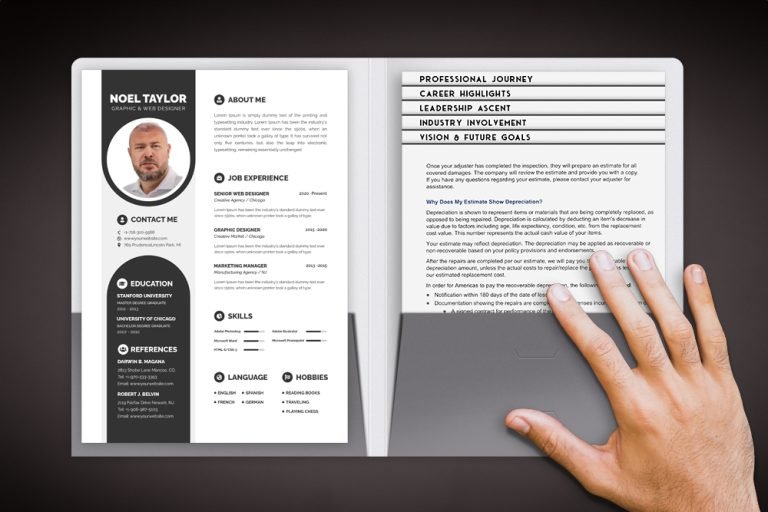
First, break down the information into sections. To start, you need a section for your name and personal contact information, one for your work experience, and one for your education. You can also add sections for technical experience, club and association membership, certifications, etc. Design your resume to fit your background. The second most important tip is to use bullets. Do not try to fit all of your information into long, descriptive paragraphs. Keep the information brief and include only pertinent information that describes your work experience and skills. Make sure you put the most important information first, and put an emphasis on your achievements instead of your responsibilities. Also, where you can, quantify the information. For example try to include information such as: how many people did you support, how much money did you save, how many pieces of product did you ship? Use numbers to back up your information. And the most important part of writing your resume is proofreading. Do it at least twice, ensure that there are no spelling or grammatical errors and no typing errors. Have a friend read it as well, they may catch mistakes you’ve overlooked.

When you start your job search, make sure you have an effective resume. Keep it concise, organized, informative and error-free for the best resume results.

About | Contact | Terms | Privacy | Sitemap | Forum | Resources | Coupons | Resume Service Reviews | Resume Distribution